Established 1300
The Belltower of Fiagnano
Seven centuries of stone, wood, and faith — standing sentinel over the valley since the age of the Knights Templar
Explore Its StoryEstablished 1300
Seven centuries of stone, wood, and faith — standing sentinel over the valley since the age of the Knights Templar
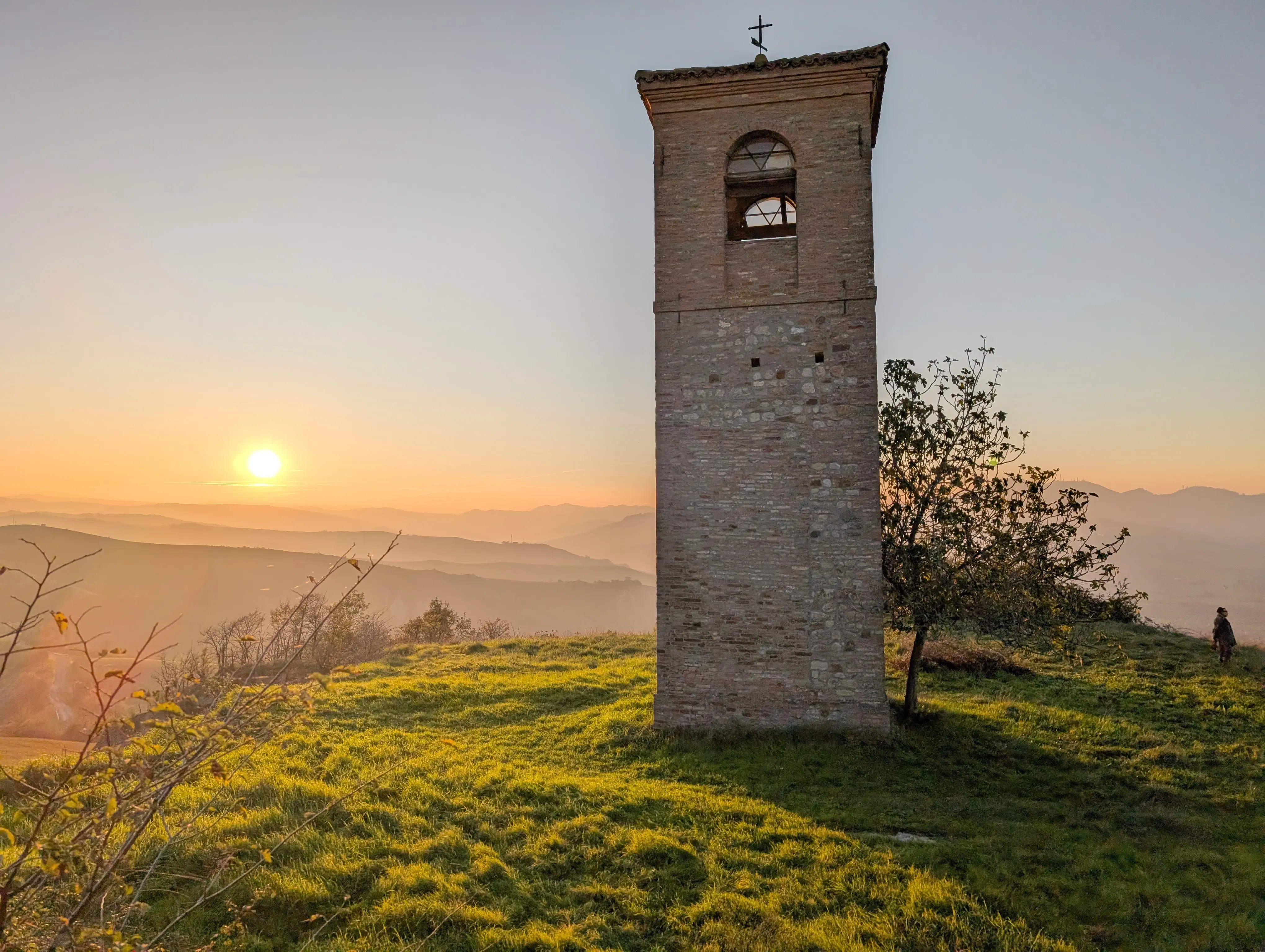
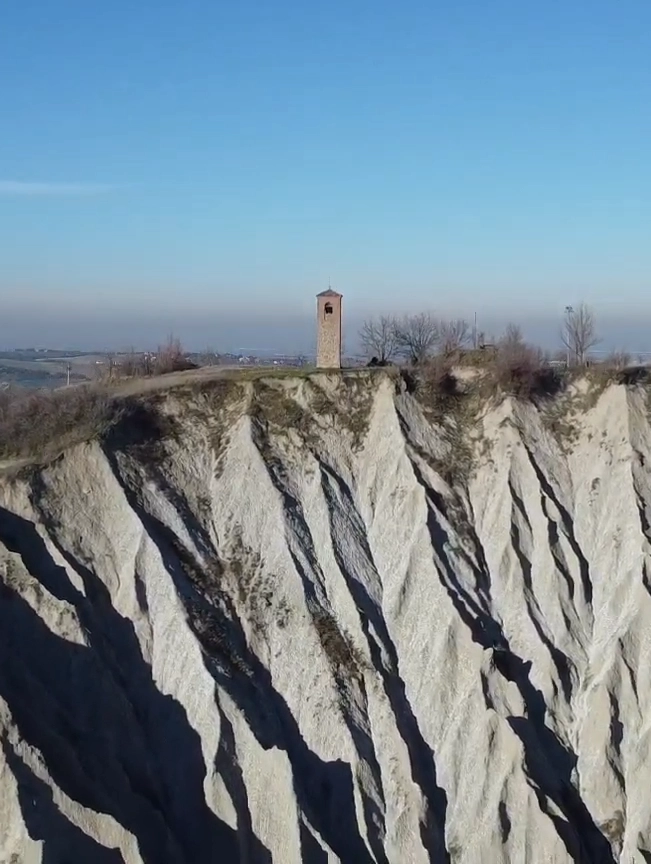
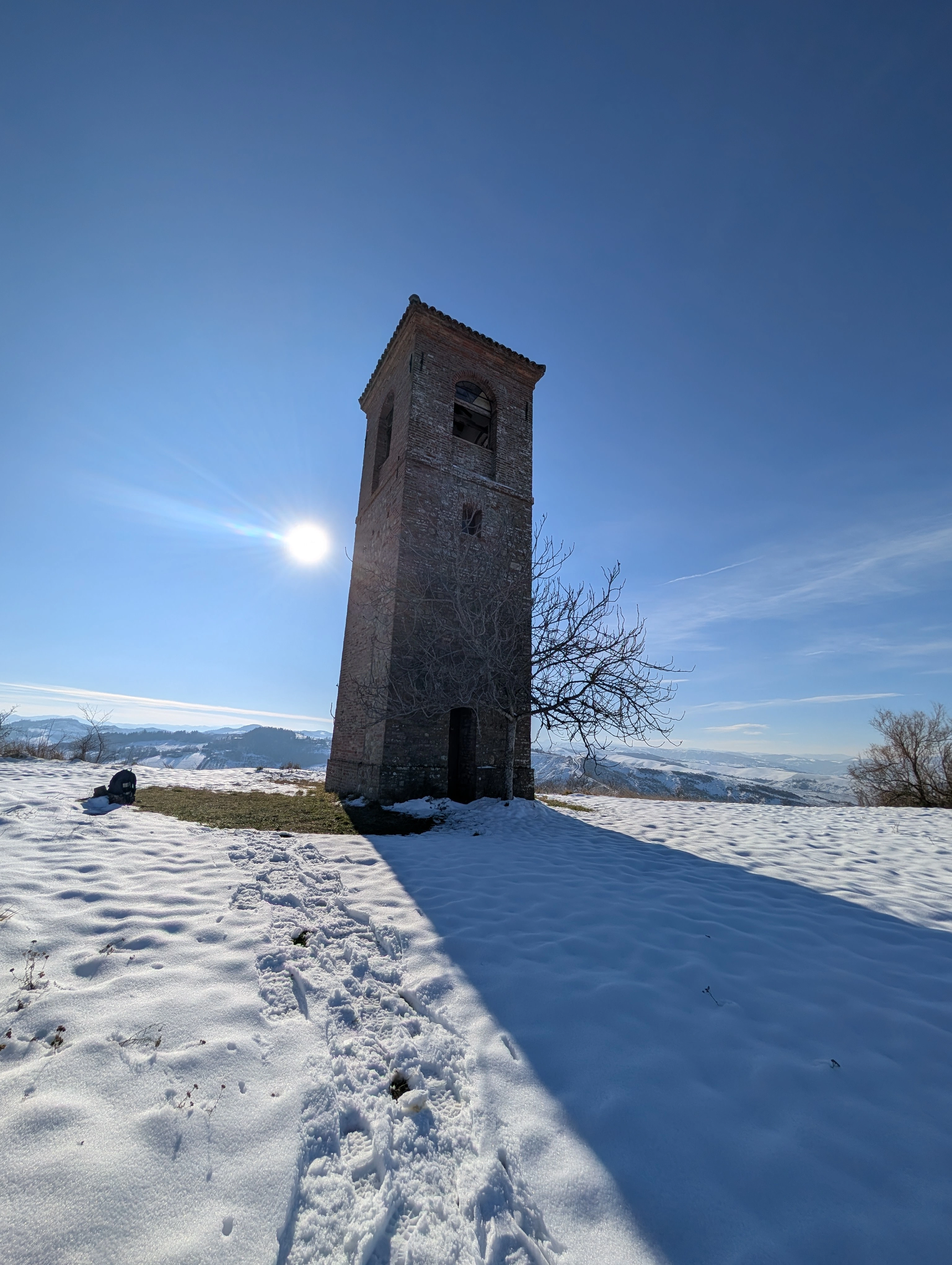
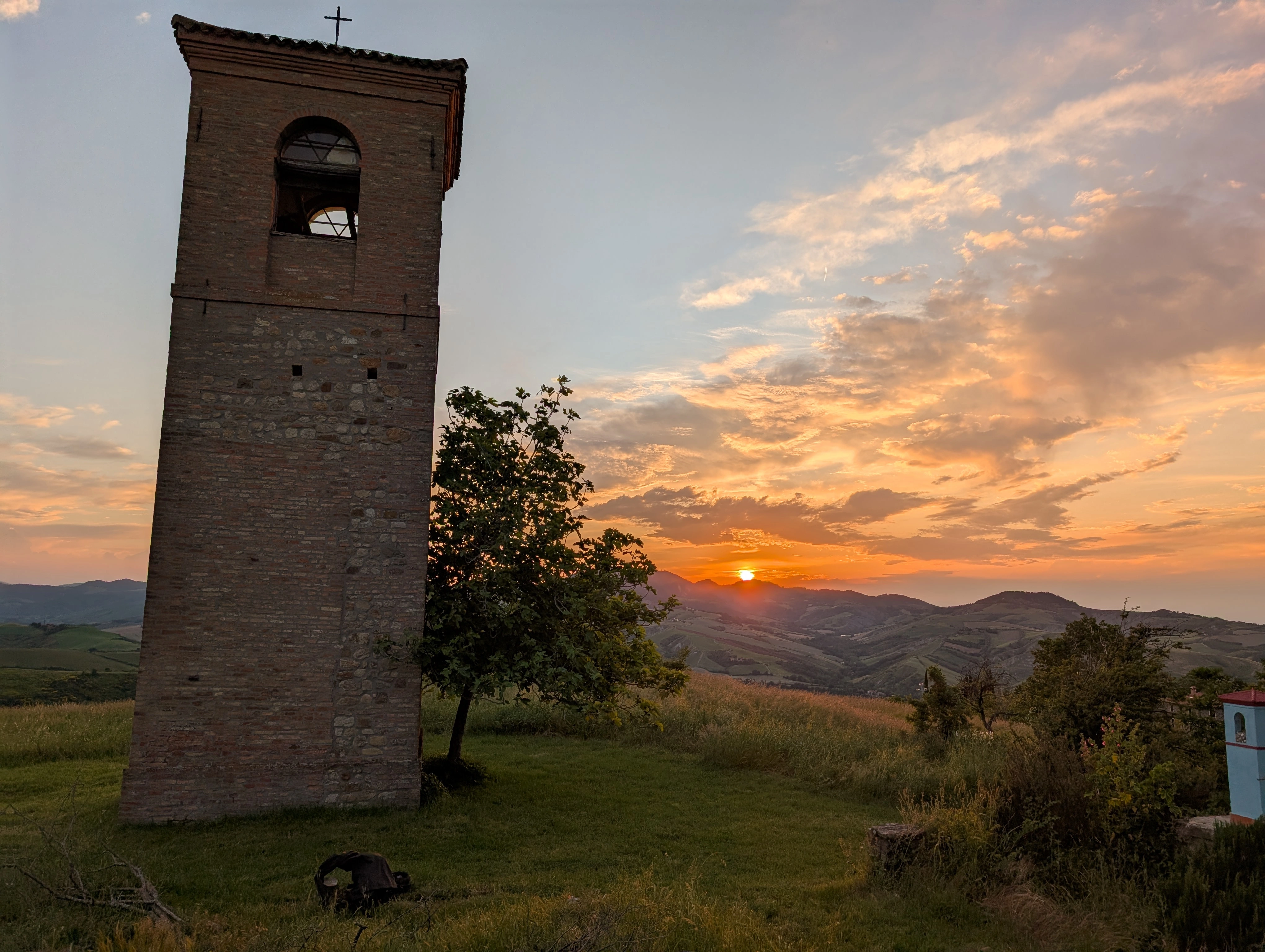
Explore Its StoryThe Belltower of Fiagnano stands alone, dominant lord over the breathtaking badlands amphitheatre that takes its name from it — the Calanchi di Fiagnano.
Once part of an imposing ecclesiastical complex dating to the mid-14th century, comprising the church — dedicated to St. John the Evangelist — the rectory and, in more remote times, even a hospital and hostel for pilgrims.
Kept within the church were two artefacts of rare importance: a Papal Bull confirming the grant of indulgences to all who came during the Perdonanze, and the legendary Flowering Staff of Pope Honorius II.
It was not the fighting of the Second World War that sealed its fate — although heavily damaged, the church was restored in the 1950s — yet the desolation begun by the passage of the Gothic Line and left unfinished was brought to completion by human neglect.
The belltower and the surrounding area were restored in 1978 by a group of local parishioners who, with admirable dedication, returned lustre and dignity to the place.
The three ancient bells, cast in the 19th century by the Brighenti foundry — removed in the 1960s — now live a renewed existence in the parish of San Giovanni Evangelista at Zolino in Imola, ever faithful in marking the rhythms of life, messengers of joy and sorrow.
And so it remains — a sentinel that ever watches over the valleys of the Sillaro and the Sellustra, without medals or ornaments; its voice now silent, but its spirit unbroken.
The bell chamber still preserves the complex wooden framework (known as the campanary castle) where the three bronze bells were housed. From the four wide arched windows, the gaze is free to roam a full 360° and follow the arc traced by the sun from dawn to sunset.
The top of the tower is reached via three steep wooden staircases connecting its four floors (the ground floor, two intermediate levels supported by timber joists, and the topmost one occupied by the bell chamber). The deep dimness inside, caused by the soft light filtering through the two narrow windows, gives way to a dazzling brightness once you reach the bell chamber.
From the 13-metre summit, you can admire a breathtaking panorama that spans from the Rocca di Monte Battaglia to the often snow-capped peak of Monte Cimone and on to the Alps. Lower your gaze just slightly, and the jagged crests of the vertiginous calanchi seem to emerge from the surrounding hills like the bones of the earth itself.

Pope Honorius II, whose birth name was Lamberto Scannabecchi, was born around 1060 in Fiagnano, near Imola, Italy. He became pope in 1124 and served until his death in 1130.
One of his major accomplishments was his role in negotiating the Concordat of Worms (1122), which helped settle the long-running conflict between the papacy and the Holy Roman Emperor over the appointment of bishops. He also supported new religious communities, including the Premonstratensians, and approved the Knights Templar.
A popular legend associated with Honorius II says that, during his youth, as he was with his father helping him make bread the bells of all the nearby churches started ringing to signal the death of the current pope. Curious, the young Lamberto asked his father why and upon hearing the reply that the pope had died he excitedly proclaimed that he too would be pope one day.
His father amused by this grabbed the dead and charred stick he was using to turn the bread inside the oven and said Lamberto would become pope once that wizened stick sprouted flowers.
He stuck it into the muddy ground and countless white blossoms immediately appeared from the charred stick. The event was taken as a sign of his future greatness and holiness.
Honorius II died in Rome in 1130 and was buried in the Basilica of St. John Lateran.
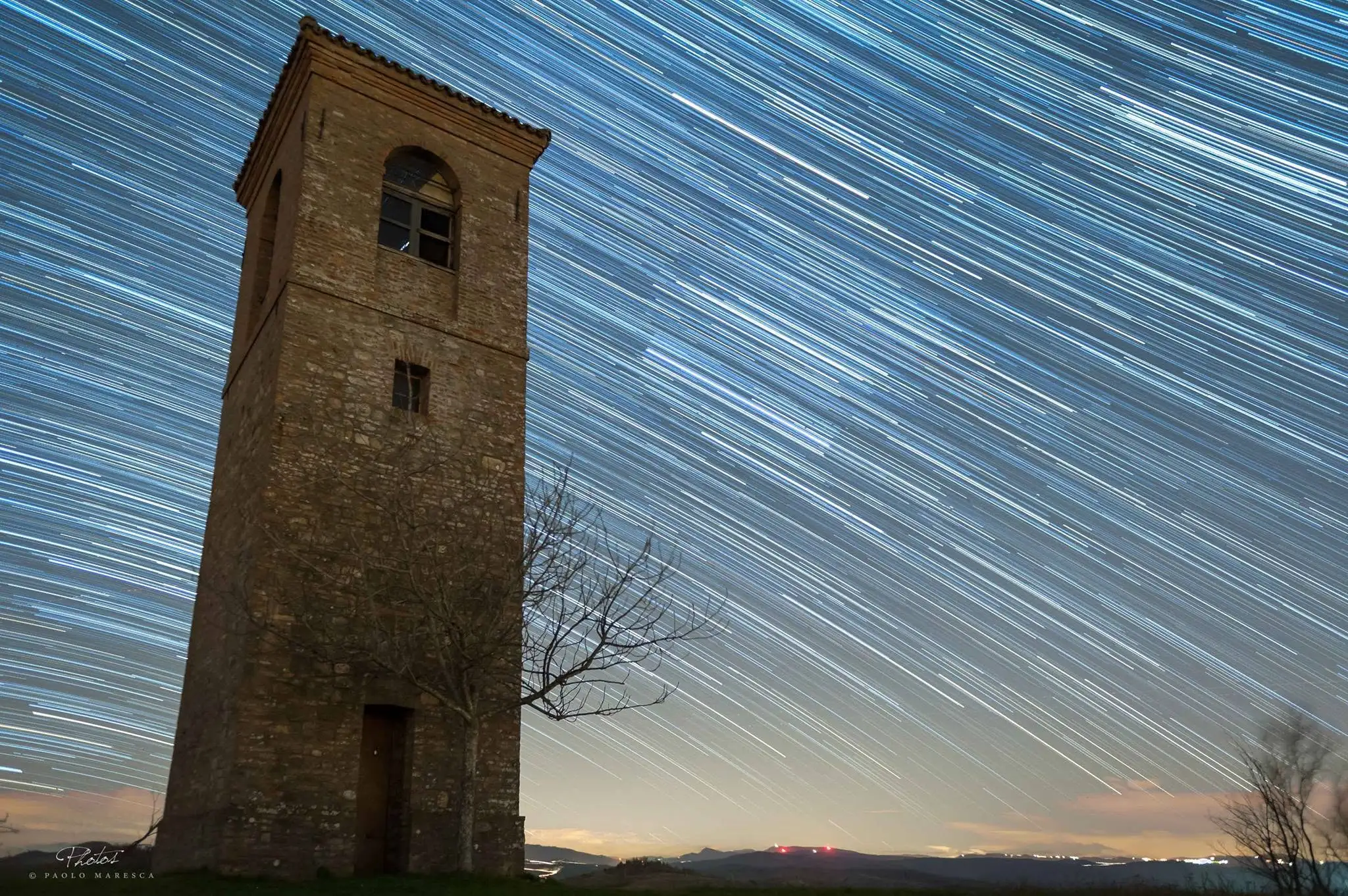
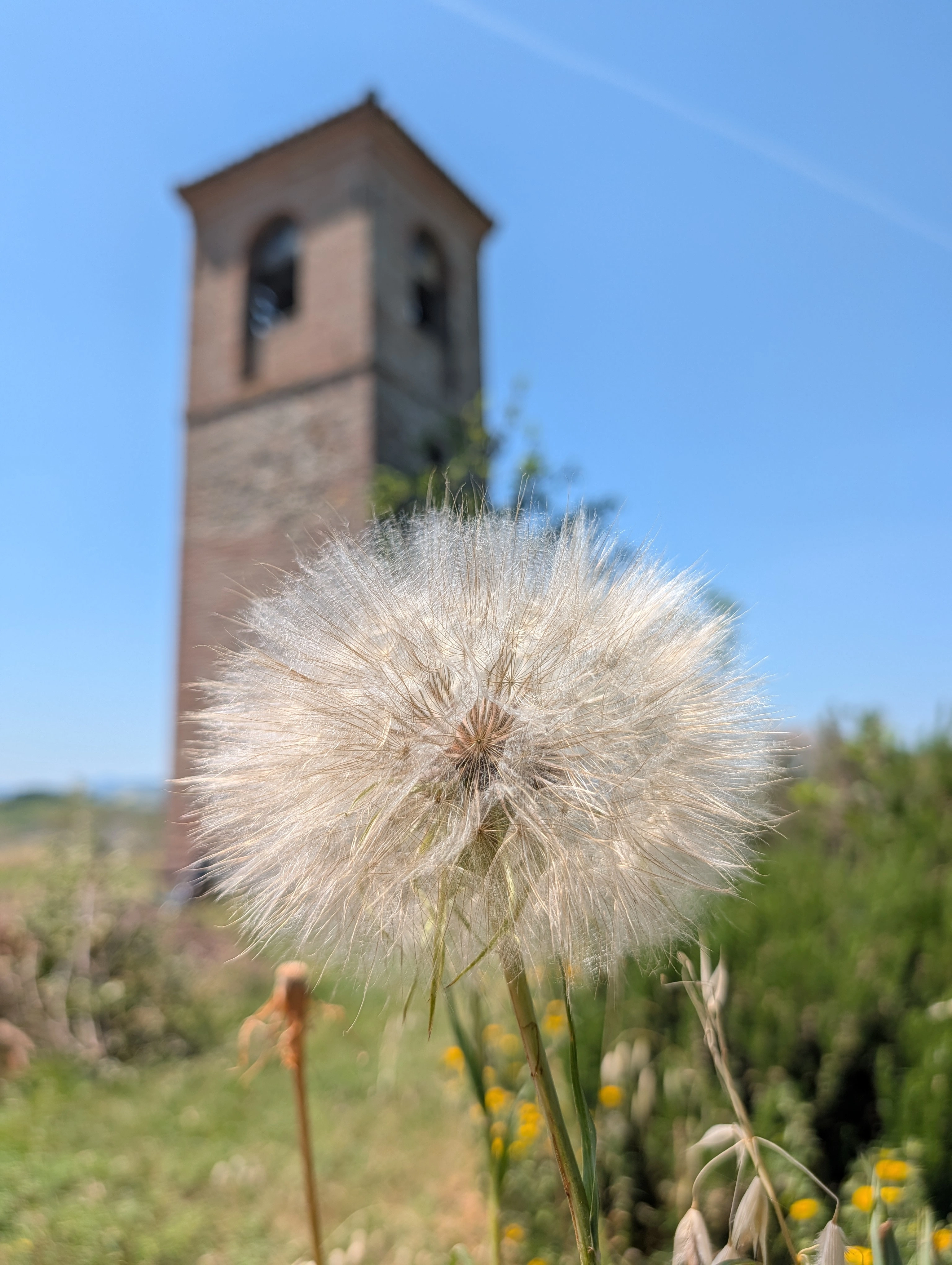
A curated selection of the tower and the surrounding landscape through the seasons.
The belltower and the surrounding area are private property, and access is not permitted for reasons of safety/civil liability.
The area is, however, opened to the public on certain occasions, and the owners can be contacted in any case for information or special requests.
Thank you for reaching out. We'll get back to you within two working days.